Column · @everydaykeysense
How Rekeying Your Home Changes Who Can Enter
What rekeying means for your door locks
When you move into a new home or lose a key, the question of who else can unlock your door becomes urgent. Rekeying is a simple process that changes the internal pin arrangement inside a lock cylinder so that old keys no longer work. The lock hardware stays in place, but the key that opens it becomes something new. This gives you direct control over access without replacing the entire lock.
Rekeying is different from replacing a lock because it keeps the same exterior hardware. The lock cylinder, which is the part that accepts the key, is adjusted or swapped out. A locksmith takes the cylinder apart, removes the old pins, and installs a new set that matches a different key. The result is that any key that previously worked becomes useless. Only the new key will turn the cylinder and retract the bolt.
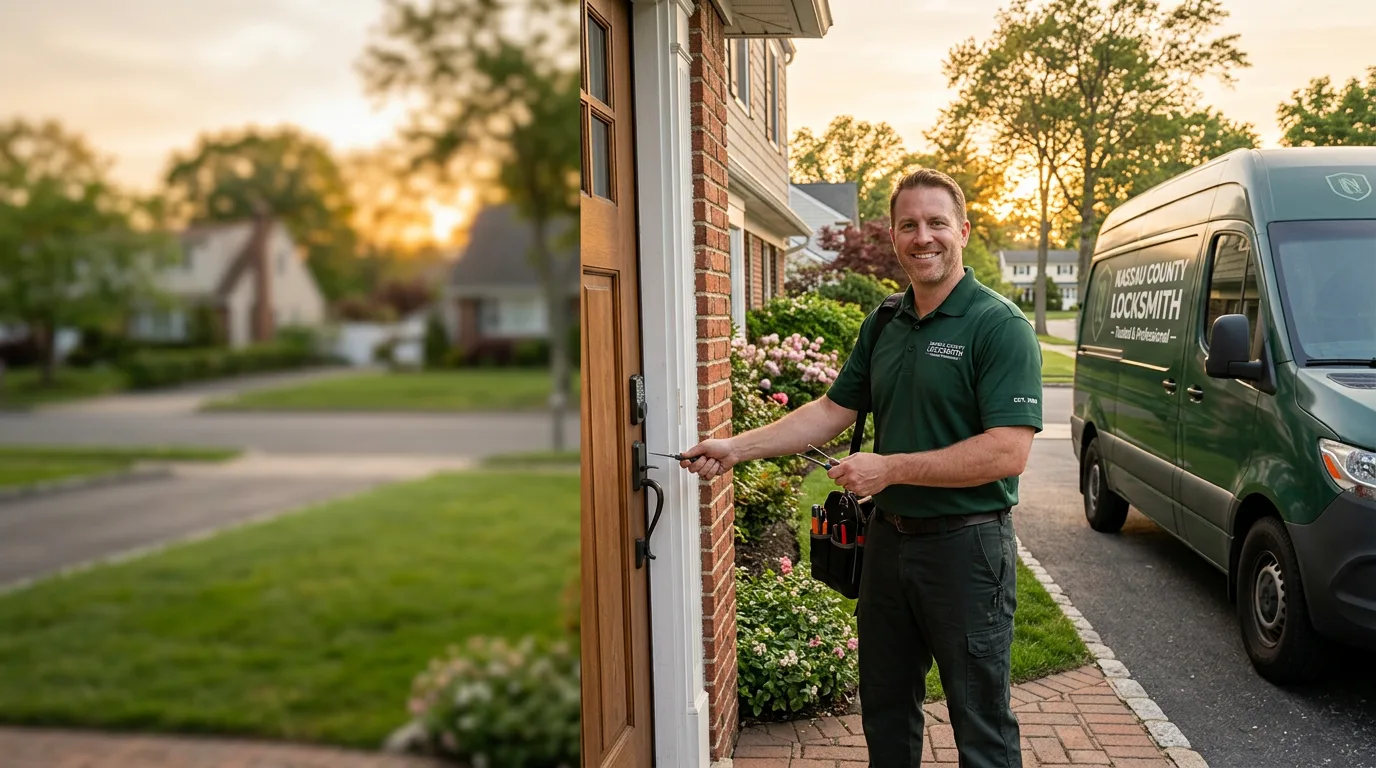
For homeowners, this is a practical way to regain security quickly. It costs less than buying new locksets for every door, and it avoids drilling into door edges or replacing strike plates. The process works on most standard deadbolts, knob locks, and lever handles. A mobile locksmith, such as the team at locksmithnassaucounty.com, can perform rekeying on site, often within a short visit.
How the rekeying process works step by step
A locksmith begins by removing the lock cylinder from the door. This is usually held in place by a small screw or retaining clip. Once the cylinder is out, the locksmith takes it apart to access the pin chamber. Inside are spring-loaded pins of different lengths. When you insert the correct key, the pins align at the shear line, allowing the cylinder to rotate.
To rekey, the locksmith removes the existing pins and replaces them with a new set that matches a different key. The new key is cut to align those pins. The cylinder is reassembled and reinstalled. The door hardware, including the handle, deadbolt, and strike plate, remains unchanged. The only difference is which key works.

This whole job can be completed in minutes per lock. It requires precision, but it does not involve removing the door or replacing the entire lockset. The key control shifts entirely to the new key. No one holding an old key can enter.
When rekeying is the right choice
There are several common situations where rekeying makes sense. Moving into a previously owned home is the most frequent. You cannot know how many copies of the old key exist, or who has them. Rekeying gives you a fresh start without the expense of buying new locks for every door.
Another scenario is after a lost or stolen key. If your house key goes missing, there is a real risk that someone could find it and use it. Rekeying removes that risk by making the lost key useless. The same applies if a tenant moves out, a roommate leaves, or a contractor fails to return a borrowed key.
Rekeying is also useful when you want all your exterior doors to open with the same key. A locksmith can rekey every cylinder to match a single key, so you carry one key for the whole home. This is called keying alike, and it simplifies daily life without decreasing security.
What rekeying does not change
It is important to understand that rekeying only affects the lock cylinder. It does not change the physical strength of the door, the quality of the deadbolt, or the security grade of the strike plate. If your existing door hardware is worn, loose, or made of low-grade materials, rekeying alone may not provide the level of security you need.
For example, a deadbolt with a thin bolt or a weak strike plate can still be forced open even if the cylinder is new. Rekeying addresses key control, not physical attack resistance. If the door frame is damaged or the hinges are weak, those issues remain after rekeying. A thorough security assessment should consider the whole door assembly.
Rekeying also does not affect electronic locks or smart locks. Those systems operate differently, using codes, apps, or biometrics. The rekeying process is specific to mechanical pin-tumbler cylinders. If your home uses electronic entry, the concept of changing access is handled through programming, not pin replacement.
Trade-offs between rekeying and full lock replacement
Rekeying is faster and less expensive than replacing locks, but it does not upgrade the hardware. If you want a higher security grade, a different type of lock, or a fresh look, replacement might be better. Replacement also lets you choose a lock with anti-pick or anti-bump features, which rekeying cannot add.
However, replacement often involves drilling, new strike plates, and possible modifications to the door. This takes more time and costs more. For most homeowners, rekeying provides a solid balance of cost, speed, and improved security. The choice depends on your specific needs and the condition of your existing hardware.
A key advantage of rekeying is that it preserves the door's appearance and avoids drilling new holes. If you have a historic door or a custom finish, keeping the existing hardware may be desirable. Rekeying lets you maintain the look while changing the access.
What to expect when calling a locksmith for rekeying
When you contact a locksmith, expect them to ask how many locks need rekeying and whether you want them keyed alike or separately. They will also want to see the existing keys and locks to determine compatibility. Most standard residential locks can be rekeyed. Some high-security or restricted-keyway systems may require special cylinders.
The locksmith will arrive with a kit of pins, springs, and key blanks. They will remove each cylinder, re-pin it, and cut new keys on site. You should receive at least two or three new keys per lock. Old keys should be returned to you or destroyed. Do not keep old keys; they are now useless but could still be misused if left around.
A professional locksmith, such as one from locksmithnassaucounty.com, can also inspect the strike plate and deadbolt during the visit. They can advise if any hardware is worn or loose. This is a good opportunity to address small issues before they become security problems.

How to maintain key control after rekeying
Once your locks are rekeyed, you have a fresh set of keys and full control over who has copies. Keep track of how many keys exist and who holds them. Avoid lending keys to people who do not need regular access. If you must lend a key, retrieve it promptly.
If you lose a key after rekeying, you may need to rekey again. Some locksmiths offer systems where you can order replacement keys by code, but this varies. The simplest approach is to keep spare keys in a secure place and not label them with your address.
Rekeying is not a one-time fix for all security concerns, but it is a straightforward way to answer the question of who can unlock your door. It puts the control back in your hands without the hassle of changing every lock.